HPFS
Hot Plate Thermal Film Shrinkage Apparatus
Hot plate thermal shrinkage device with temperature range up to 200 °C, ideal for R&D and rapid screening across va...
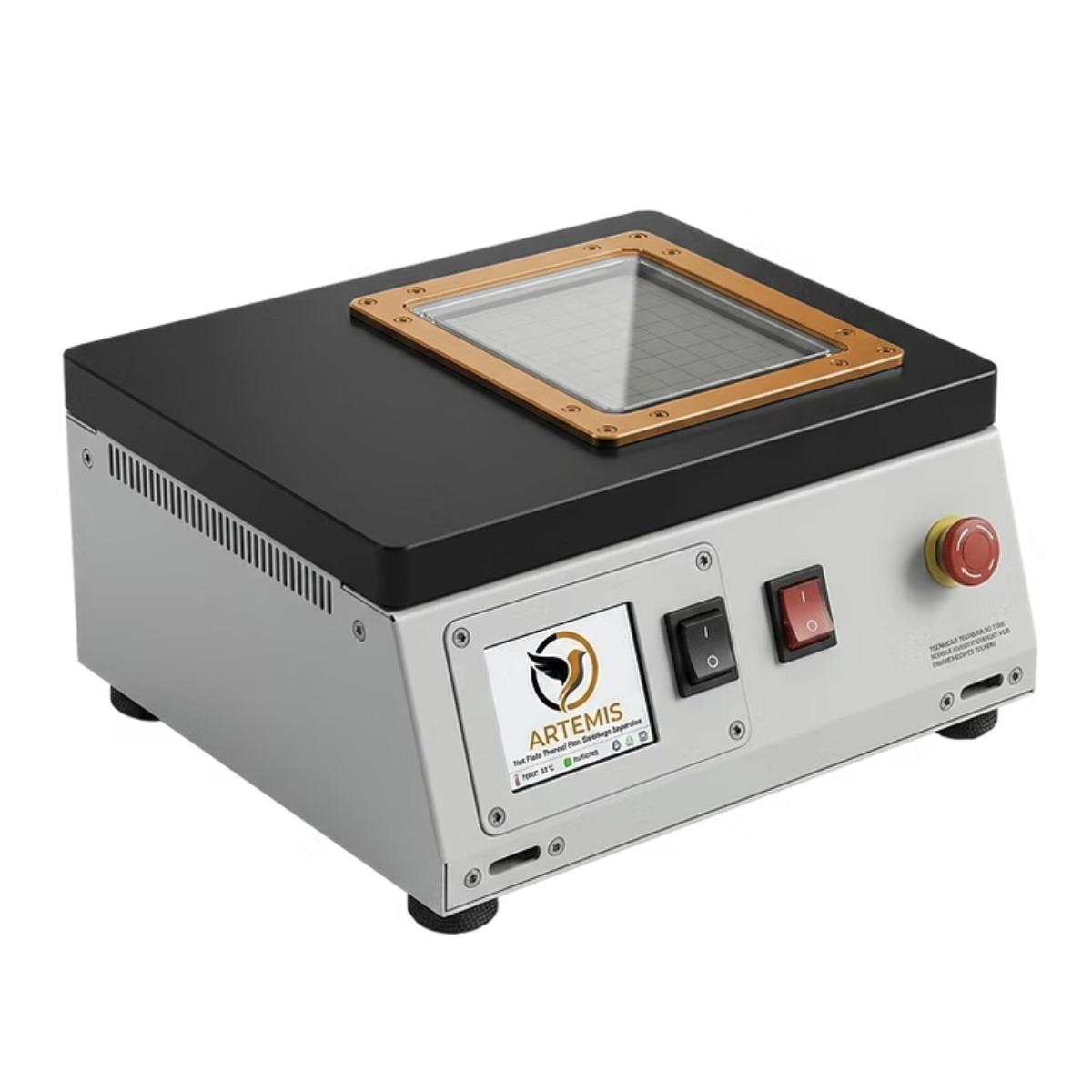
The hot plate method is an alternative and complementary technique to the liquid immersion method for determining the thermal shrinkage of polymer films. The film is placed in direct contact with a temperature-controlled heated metal surface, using a thin layer of silicone oil as an interface to ensure uniform heat transfer between the plate and the sample, releasing the “frozen” internal stresses in the film and causing contraction in the machine direction (MD) and transverse direction (TD). In the hot plate method, heating is more immediate and easily adjustable over a wide temperature range, up to 200 °C. This makes it particularly suitable for thermal characterization studies at high temperatures, for materials that cannot be immersed in liquids (e.g., films with sensitive coatings), and for exploratory and product development analyses where one wishes to quickly map shrinkage behavior over a wide temperature range. Unlike the immersion method, the hot plate method is not associated with a specific international standard (such as ASTM D2732), but is widely adopted in the flexible packaging industry as a screening and R&D tool, thanks to its operational simplicity and speed of execution.
Hot Plate Thermal Film Shrinkage Apparatus
Hot plate thermal shrinkage device with temperature range up to 200 °C, ideal for R&D and rapid screening across va...