ESCR
Environmental Stress Cracking Resistance Tester
System for evaluating the susceptibility of ethylene-based plastics to environmental stress cracking
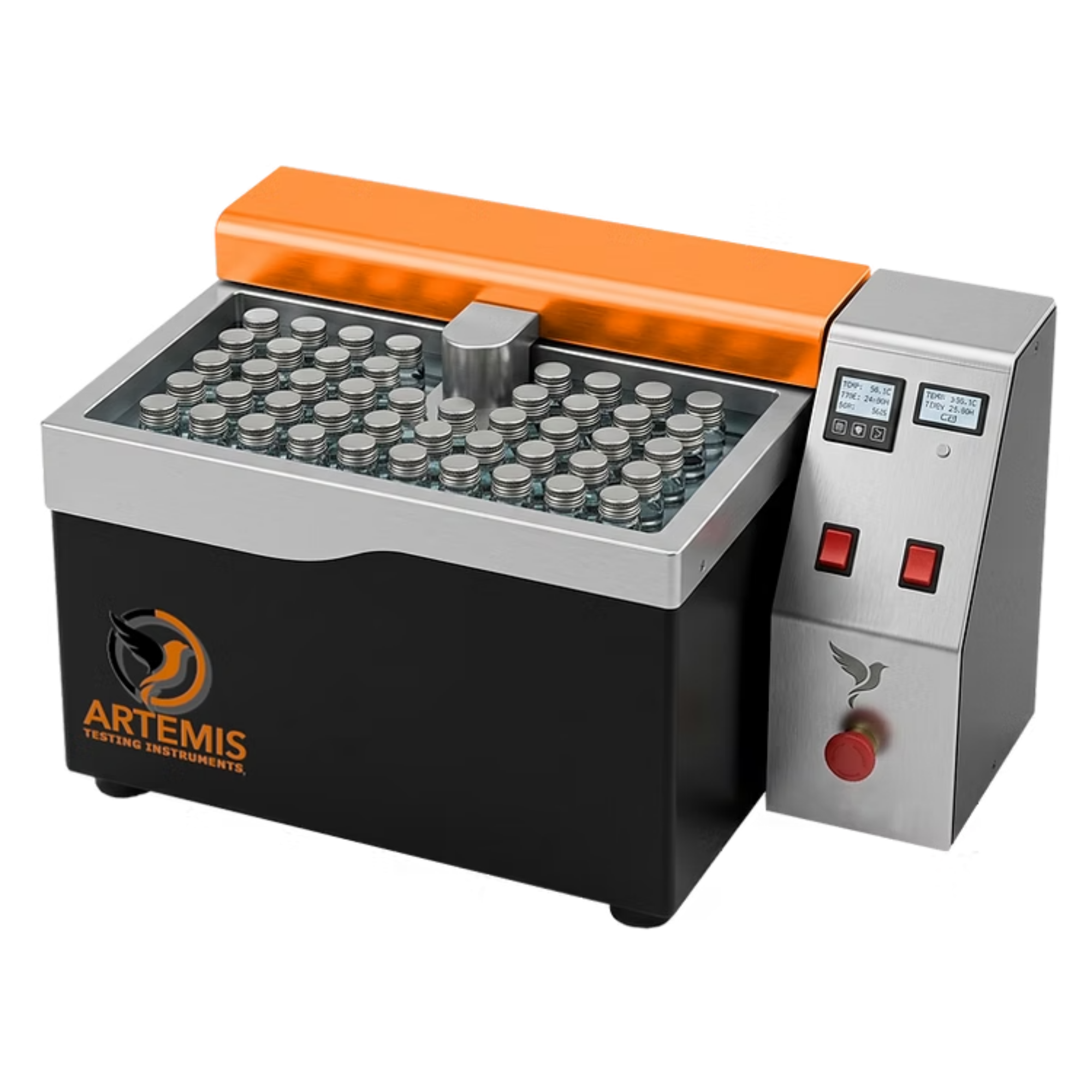
Environmental Stress Cracking (ESC) is a phenomenon in which a plastic material, even when subjected to mechanical stresses below its short-term strength limit, can crack or fail prematurely in the presence of certain chemical agents: detergents, surfactants, solvents, oils, or lubricants. It is one of the primary failure mechanisms in high-density polyethylene (HDPE) components and other polyolefins. The ESC resistance test (ESCR – Environmental Stress-Cracking Resistance) simulates accelerated operating conditions in the laboratory by immersing notched and bent test specimens in a solution of the chemical agent at a controlled temperature and monitoring the onset of cracking over time. The resulting parameter—typically the time required for 50% of the specimens to crack (F₅₀, in hours)—allows for the comparison of different materials or different grades of the same polymer.
Environmental Stress Cracking Resistance Tester
System for evaluating the susceptibility of ethylene-based plastics to environmental stress cracking