SH-A
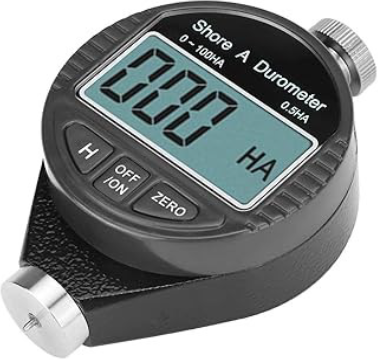
Shore A Durometer
Digital Shore A durometer for rubbers, and soft plastics with LCD display, Hold and Zero functions
Shore hardness measures a polymeric material’s resistance to penetration by a standardized indenter under a defined load. Unlike the Vickers or Brinell scales—designed for metals and ceramics—the Shore scale was developed specifically for elastomers, rubbers, and plastics, for which traditional methods are unsuitable due to their deformability. The two scales most commonly used in the industry are Shore A, for soft and elastic materials (rubbers, TPEs, TPUs, silicones), and Shore D, for rigid thermoplastics (HDPE, PP, ABS, nylon, polycarbonate). Values are expressed on a scale from 0 to 100; the reading can be instantaneous or time-dependent (typically 15 seconds) to account for the material’s viscoelastic relaxation. A practical and quick indicator, Shore hardness correlates with the surface elastic modulus, abrasion resistance, and tactile characteristics of the finished product. It is widely used in quality control to verify the conformity of compounds, the degree of vulcanization of elastomers, and consistency between batches.
Shore A Durometer
Digital Shore A durometer for rubbers, and soft plastics with LCD display, Hold and Zero functions
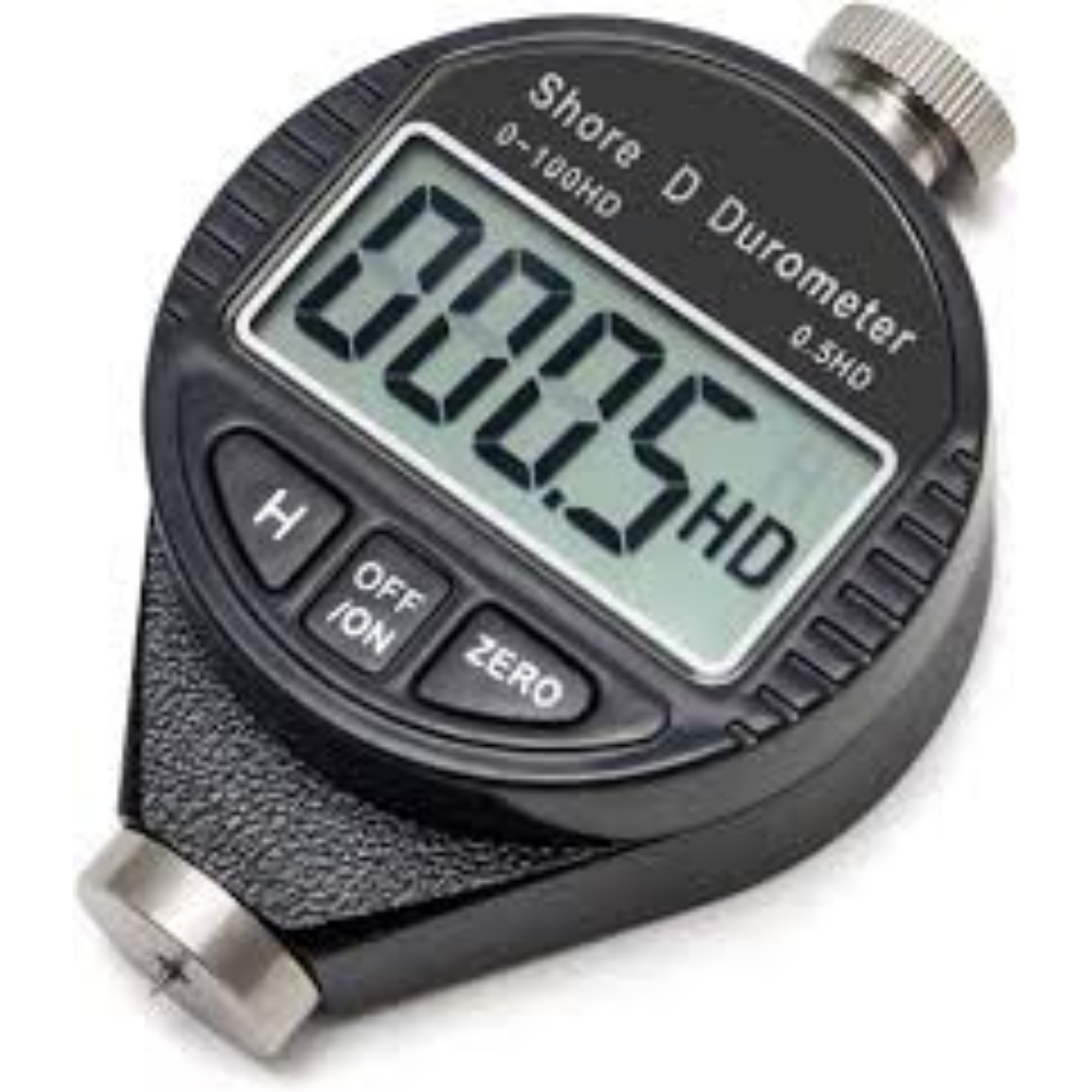
Shore D Durometer
Digital Shore D durometer for rubber, polymers and rigid thermoplastics with LCD display, Hold and Zero functions
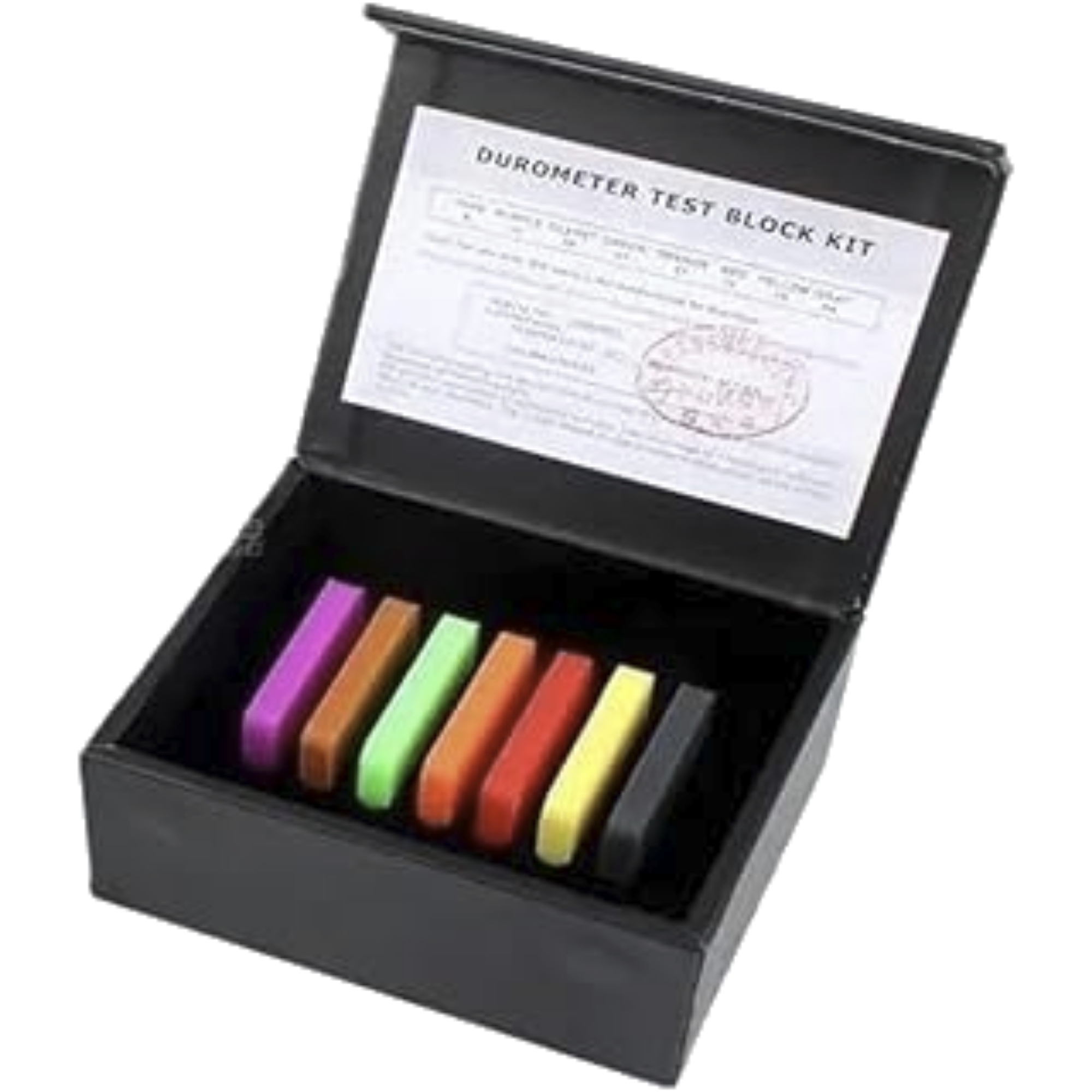
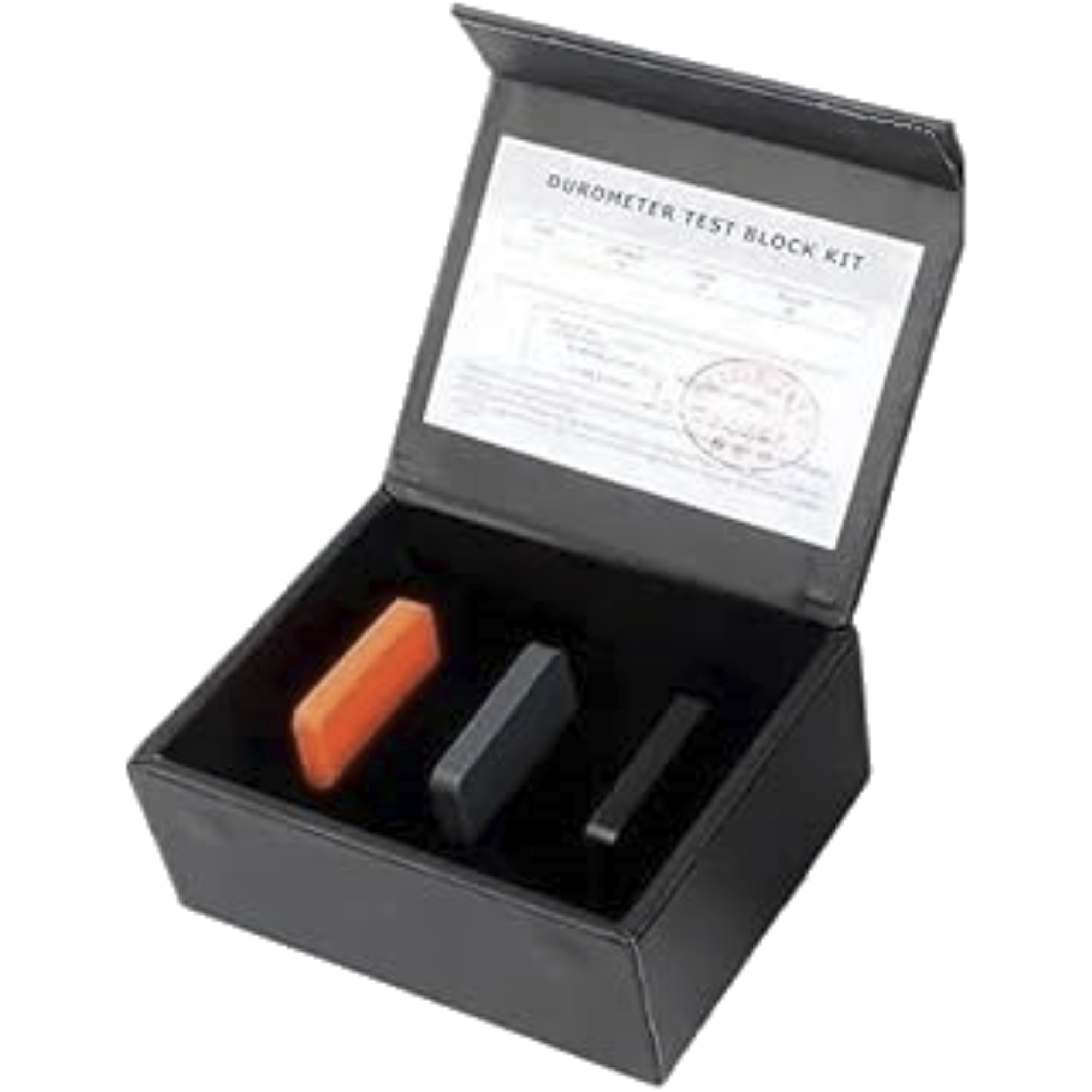
Shore A reference blocks
Set of 7 colour-coded Shore A reference blocks (values 29–89) for accuracy verification of the Shore A durometer
Shore D reference blocks
Set of 3 colour-coded Shore D reference blocks (values 20–90 HSD) for accuracy verification of the Shore D duromete...
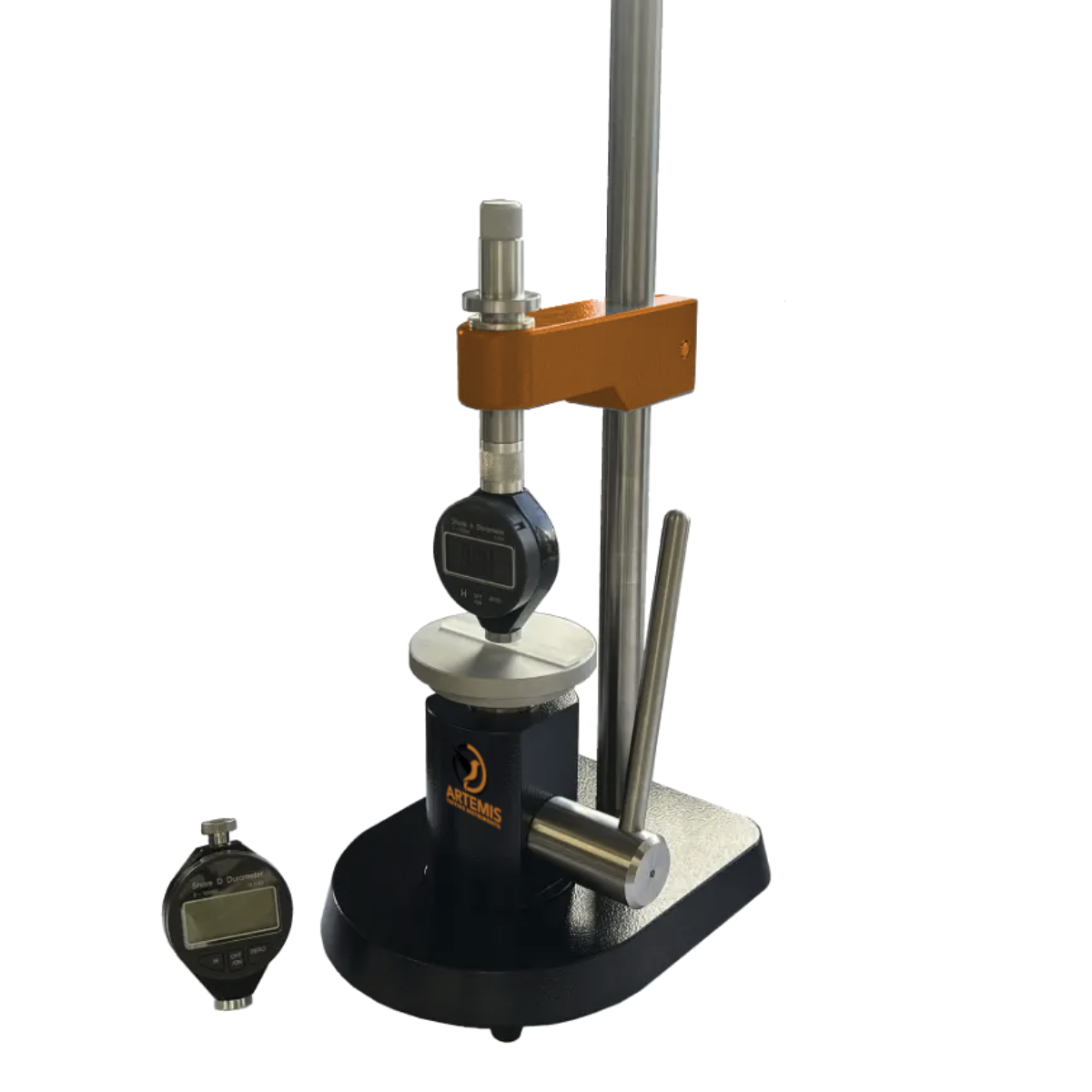
Durometer bench stand, lever-operated
Lever-operated bench stand for Shore A and D durometers: constant, repeatable vertical load