TCM-100GV
Thermal conductivity analyzer
High-accuracy thermal conductivity analyzer for solids, thin films, polymers, and metals per ASTM D5470
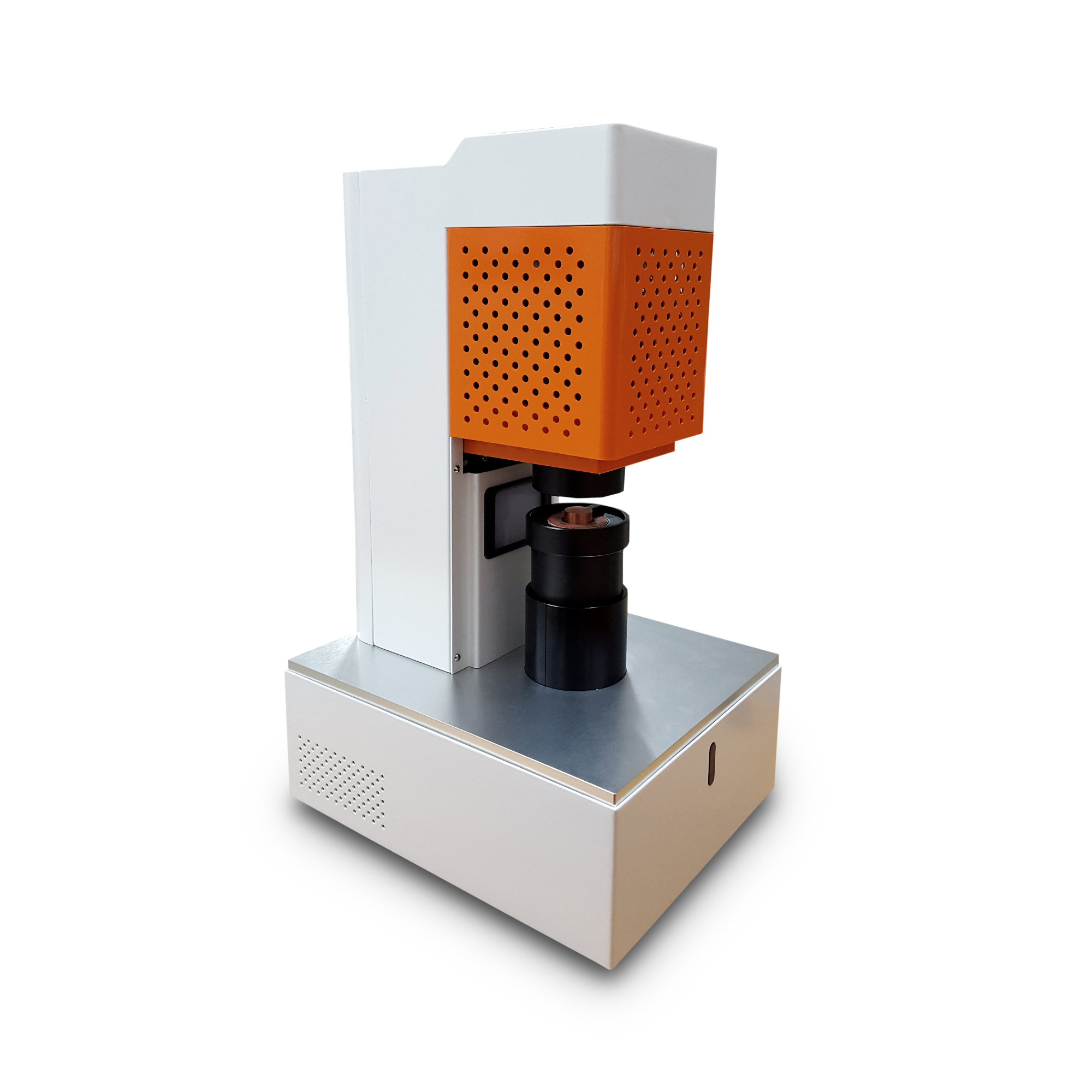
Thermal conductivity (λ, expressed in W/m*K) is the property that quantifies a material ability to transmit heat by conduction, i.e., the transfer of thermal energy through matter without macroscopic mass movement. It is an intrinsic material property, influenced by composition, microstructure, and temperature. The ASTM D5470 standard defines the measurement method for thermally conductive electrical insulating materials, whether homogeneous or composite: the sample is placed between two temperature-controlled metal blocks and, once steady-state conditions are reached, the apparent thermal conductivity is derived from the measured temperature gradient and sample thickness. The intercept at zero thickness yields the interfacial contact resistance between the sample and the blocks. The pressure applied to the sample is a critical test parameter, as it directly affects the actual contact area and therefore the measurement results. The method is applicable to solids, polymers, gels, elastomers, thin films, and metals.
Thermal conductivity analyzer
High-accuracy thermal conductivity analyzer for solids, thin films, polymers, and metals per ASTM D5470